Pool Energy Efficiency in Coachella Valley's Desert Heat
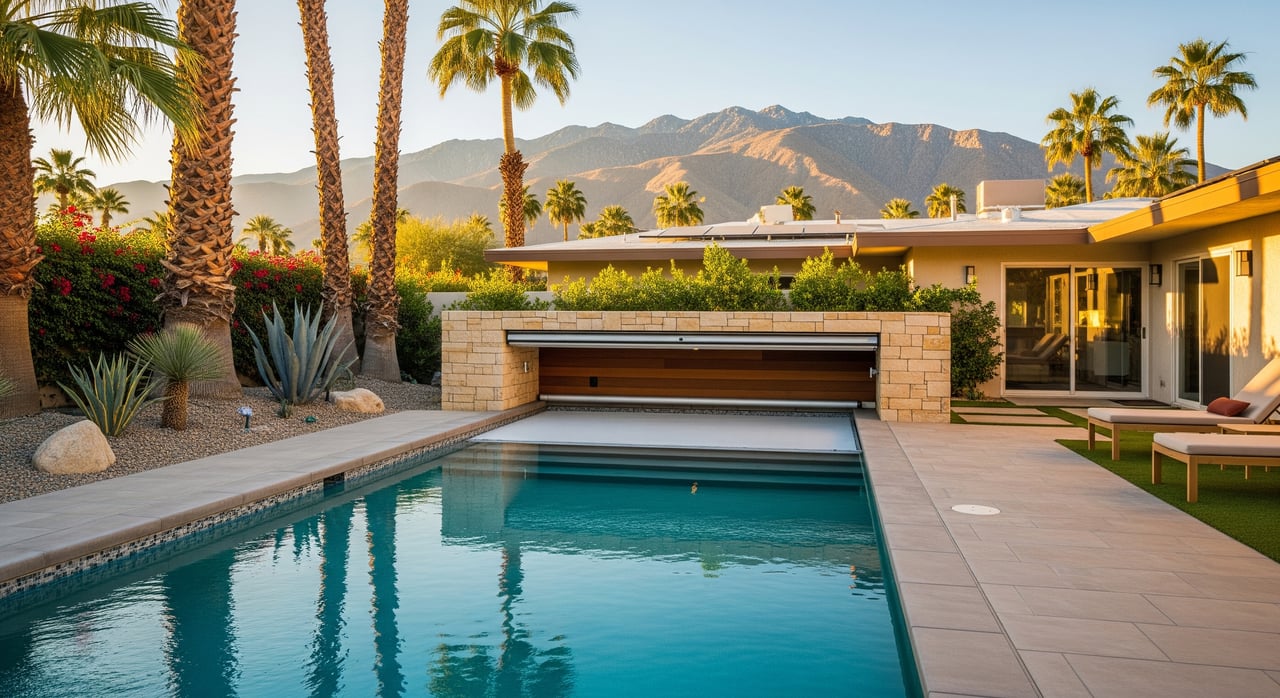
Triple-digit desert days make your Palm Springs pool feel essential, but they can also drive up your power bill and water use fast. You want a clean, comfortable pool without wasting kilowatts or gallons. The good news is you can get real savings with the right pump, smarter schedules, and a cover plan that works in heat and wind. This guide shows you what to change, how to size it, and how to run it for peak efficiency. Let’s dive in.
Palm Springs heat, low humidity, and frequent winds create perfect conditions for evaporation and energy loss. Daytime sun loads your water with heat, then nighttime cooling pulls that heat back out. Add time-of-use pricing from many local utilities, and how you run your pool matters as much as what equipment you own.
You can’t control the weather, but you can control flow rates, run times, and surface exposure. Small adjustments deliver big savings, especially with a variable-speed pump and a cover you’ll actually use.
A variable-speed (VS) pump lets you match flow to what the pool needs instead of blasting high speed all day. The physics are on your side. When you cut pump speed, power use drops much faster:
That means reducing speed to 50 percent drops power to about 12.5 percent. In practice, VS pumps often cut energy use by roughly 50 to 90 percent compared to older single-speed models, depending on your schedule and settings.
Picking the right VS pump starts with a few simple numbers and a quick hydraulic check.
Step 1: Volume and turnover
Step 2: Total Dynamic Head (TDH)
Step 3: Choose a VS pump for low-RPM duty
Before you buy, verify that your replacement pump appears on the California Energy Commission’s certified products list and meets current state efficiency and control requirements. Rules and lists update, so confirm certification and labeling at the time of purchase.
You do not need an engineering degree to see your savings.
For VS pumps, use the manufacturer’s published power draw at each RPM, not the nameplate HP. To estimate savings, measure your current pump’s monthly kWh, then compare to the projected kWh from your planned VS schedule. Savings = (baseline kWh − new kWh) × your electricity rate.
In Palm Springs, longer and slower usually wins. Circulate most of the day at low speed, and limit high-speed bursts to what’s truly necessary. If you’re on time-of-use pricing, align the higher-power tasks with off-peak windows.
Use these as starting points and tune for your pool’s clarity and debris.
Baseline schedule
Split schedule
After you adjust, watch water clarity and sanitizer levels for a week. If clarity slips, nudge up your turnover before you add long high-speed blocks.
Match pump speed to your heater’s minimum flow requirement. For electric heat pumps, cooler night air can reduce efficiency even if rates are lower, so check your heater guidance and your utility’s time-of-use periods to decide the best heating window.
A good controller lets you set multiple speeds, ramp between them, and create staggered schedules. Many systems can reference simple inputs like wind or humidity to bump speeds only when needed. If you use a robotic cleaner, run it during your low-speed window or on its own schedule so you avoid extra high-speed pump time.
Evaporation is the biggest water loss driver in the desert. Sun, heat, wind, and dry air all speed up water loss. A cover that you will use consistently can be your highest-impact upgrade.
Solid safety covers
Solar or thermal bubble blankets
Liquid surface films
Automatic reels and motorized covers
To estimate savings, track your actual water loss. Try a simple bucket test or daily measurements before and after you deploy a cover. Local evapotranspiration data can help you forecast seasonal patterns.
Here is a step-by-step path that works well in Riverside County and aligns with California efficiency oversight.
Start with the basics and build your plan.
Turnover flow
Schedule target
Energy estimate template
Water savings check
Oversizing the pump
Undersizing the pump
Ignoring wind and humidity
Skipping verification
California regulates pool pump efficiency and certification through the California Energy Commission. Palm Springs and Riverside County enforce building and electrical codes for certain pool work. Many local utilities use time-of-use pricing, which can change the best schedule for your pool. Before you purchase, verify CEC product listings, check local permitting, and review your actual rate plan.
If you want help prioritizing upgrades that also make your home more market-ready, reach out. You can get local vendor introductions and a quick look at how smart, efficient features can support buyer appeal in our desert market. Know Your Home’s Worth with Unknown Company.
Stay up to date on the latest real estate trends.
Get assistance in determining the current property value, crafting a competitive offer, writing and negotiating a contract, and much more. Contact me today.