Coachella Valley Home Loan Options for Desert Buyers
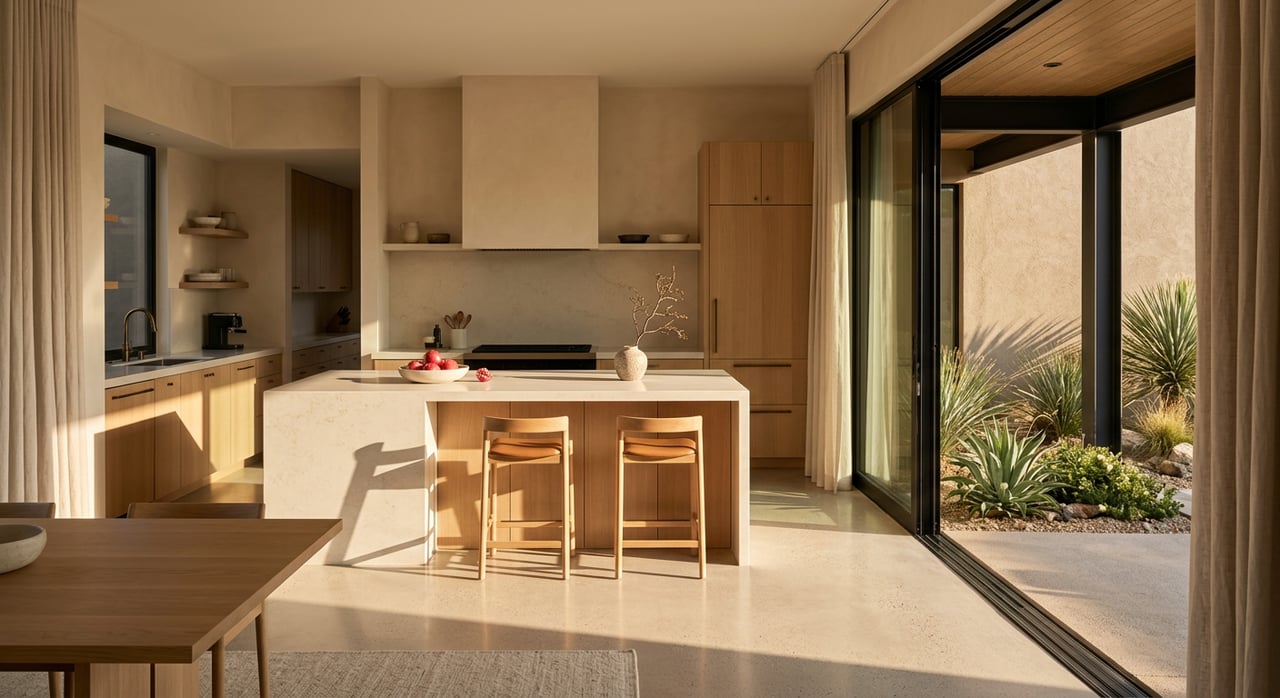
You want to buy in Palm Desert, but the loan options and desert-specific quirks can feel like a maze. You are not alone. Between jumbo thresholds, HOA rules, and items like Mello-Roos and flood maps, the details matter to both your approval and your payment. In this guide, you will learn how common loan types work here, what lenders check on desert properties, and the steps that keep your deal smooth. Let’s dive in.
Early 2026 numbers across the Coachella Valley show typical single-family medians in roughly the $600,000 to $750,000 range, with inventory above the pandemic lows. That mix shapes how you structure offers and financing. In competitive pockets, you may lean on stronger pre-approvals or appraisal strategies. In softer segments, you may prioritize rate or closing cost credits. You can see recent valley trends in the GPSR Desert Housing Report for context on price and supply shifts (local report).
Riverside County’s 2026 conforming loan limit is $832,750 for a 1-unit property. Loans at or below this limit are generally priced and underwritten under conforming rules. Any loan above that is a jumbo loan, which usually means tighter credit standards, more reserves, and larger down payments. This threshold is a key line for Coachella Valley buyers because it often separates typical Palm Desert purchases from higher-priced resort homes. You can confirm the current county cap through the FHFA list of loan limits (FHFA county limits).
Conventional loans are the go-to for many buyers. A 30-year fixed-rate gives stable payments, and 15-year options can help you pay down faster. Lenders typically look for credit scores of 620 or higher, with better pricing at 700 and above. Debt-to-income guidance often centers near 43 percent, with some flexibility based on the full profile.
Down payment choices vary. You may see 3 percent down through programs like Fannie Mae HomeReady if you meet income and other eligibility rules. Many buyers use 5 to 20 percent down to reduce or remove mortgage insurance. For second homes and investment properties, minimum down payments are higher and pricing is different. You can review program basics for income-eligible conventional options through Fannie Mae’s HomeReady overview (HomeReady details).
Local note: Appraisals on desert properties can be nuanced. Pools, casitas, golf-course frontage, and custom outdoor spaces can make comparable sales tricky. Plan for appraiser questions and allow time for valuation.
ARMs like 5/1, 7/1, or 10/1 can offer a lower initial rate. They can make sense if you expect to sell or refinance before the first adjustment. If you choose an ARM, understand the index, margin, caps, and potential payment changes. Seasonal owners and investors sometimes use ARMs for near-term ownership, but you should stress test your plan if market rates do not fall as expected.
If your loan amount exceeds $832,750, you are in jumbo territory. Jumbo lenders usually want higher credit scores, more months of reserves, and down payments in the 10 to 20 percent range, depending on your profile. Many luxury homes in nearby resort enclaves may require jumbo financing, while a large share of Palm Desert homes remain inside conforming. Verify price and loan amount early to avoid surprises.
FHA loans allow low down payments for owner-occupied homes. The minimum down payment is often 3.5 percent for borrowers with qualifying credit scores. FHA has county-based loan limits and requires you to live in the home as your primary residence. If the property needs repairs to meet FHA’s minimum standards, the FHA 203(k) renovation option can wrap purchase and rehab into a single loan. Learn more about FHA rehab financing through HUD’s official page (FHA 203(k) overview).
Desert note: Older homes with roof, HVAC, electrical, or pool-safety issues may trigger repair requirements under FHA guidelines. If you expect repairs, plan the scope early and get contractor bids so financing can be structured correctly.
For eligible service members and veterans, VA loans often provide zero-down financing with no monthly mortgage insurance. VA loans require occupancy as a primary residence and have property standards known as Minimum Property Requirements (MPRs). In the desert, that means confirming potable water, functioning utilities, and sound systems early, especially on older properties or those with unpermitted work. You can review VA loan benefits and basics through the VA’s official site (VA home loans).
If you love the location but the house needs work, renovation loans can be a smart fit. FHA 203(k) combines purchase and rehab into one mortgage, with Standard and Limited versions depending on project size and requirements like a HUD consultant and escrowed repair funds. Conventional buyers may consider Fannie Mae’s HomeStyle, which allows broad improvements under a single conventional mortgage, with contractor bids, plans, and staged draws. Confirm that your total loan amount after improvements fits inside conforming or jumbo limits, and check lender documentation needs. Fannie Mae continues to refine guidance that affects collateral and appraisal processes for conventional loans (Fannie policy updates).
Second-home loans generally require larger down payments than primary residences. For investment properties, conventional loans often require 15 to 25 percent down, stronger reserves, and higher rates. Investors who prefer to qualify based on a property’s cash flow rather than personal income may consider DSCR loans. These products evaluate the rent relative to the new mortgage payment, with many programs targeting a DSCR near 1.0 to 1.25 and down payments around 20 to 25 percent, depending on the lender. You can read a general overview of DSCR concepts here (DSCR basics).
Much of Palm Desert and the valley are served by the Coachella Valley Water District. Lenders prefer municipal water and sewer because private wells and septic systems often require extra inspections and water-quality tests. If a property is not on municipal lines, expect additional documentation and timelines. Confirm service early with CVWD resources (CVWD wastewater overview).
Some newer or master-planned areas use Community Facilities Districts that levy special taxes, commonly called Mello-Roos. These charges appear on the property tax bill and raise your monthly carrying cost. Lenders include them in your debt calculation, and appraisers note them. It is wise to check city or county documentation for CFD status early. Palm Desert meeting materials reflect recent CFD activity you can review for context (city meeting docs).
HOA covenants, rental caps, assessment history, and any litigation can affect underwriting and resale value. If you are buying a condo and using FHA or VA, confirm whether the project is approved or approvable. For renovation loans in condo or PUD communities, verify project eligibility requirements and any contractor rules before you write offers.
Unique features like golf frontage, casitas, and large outdoor upgrades can limit recent comparable sales. That can lead to appraisal gaps even in a stable market. You can plan for this with realistic price expectations, extra time for valuation, and clear discussions with your lender on appraisal options.
Standard homeowners policies do not cover flood or earthquake. Lenders require flood insurance if the property is in a Special Flood Hazard Area. Wildfire mapping and carrier guidelines also affect premiums and availability. Although the Coachella Valley is desert, flash-flood risk along washes and arroyos is real. Get preliminary quotes and endorsements early, including items like ordinance and law or water backup. For a local insurance overview, review this resource on Coachella-area homeowners coverage (insurance overview).
Unpermitted additions, older pools, or detached casitas can trigger lender conditions. You may need to show permits, complete repairs, or adjust value and rent treatment for accessory units. If improvements are needed, ask your lender about renovation options that allow repairs to be financed within the mortgage.
Use this simple path to get deal-ready while you shop.
Get pre-approved. Gather paystubs, tax returns, bank statements, and any HOA details you already have. A complete file shortens timelines and strengthens your offer.
Confirm property details fast. As soon as you identify a home, check for municipal water and sewer, any Mello-Roos assessments, rental rules for HOAs, and whether a condo project is agency approved.
Plan for valuations. For custom or resort homes, discuss appraisal-gap strategies and timing with your lender and agent. This is especially important for jumbo and renovation files.
Decide on repairs early. If the home needs work, line up contractor bids and talk through FHA 203(k) vs HomeStyle with your loan officer so you can structure the loan correctly.
Check insurability. Ask an insurance agent for early quotes on homeowners and flood if needed. Share premiums with your lender so your payment estimate is accurate.
Use these prompts to compare options and avoid curveballs.
You deserve a clear plan that fits Palm Desert’s market and your goals. If you want a single point of contact who understands both the financing and the neighborhood details, reach out. With one conversation, you can clarify your budget, compare loan paths, and map the steps to a confident close. Connect with Jeff Wettstein to get started.
Stay up to date on the latest real estate trends.
Get assistance in determining the current property value, crafting a competitive offer, writing and negotiating a contract, and much more. Contact me today.